Call: 08045803055
 Send Inquiry
 Send Inquiry
Glass Fuse
Glass Fuse Specification
- Vehicle Type
- Universal (cars, bikes, electronics, etc.)
- Working Life
- Up to 10000 cycles
- Temperature Range
- -55C to +125C
- Connecting Type
- Axial
- Noise Level
- Silent
- Size
- 5 x 20 mm, 6 x 30 mm
- Finish
- Polished
- Part Type
- Fuse
- Corrosion Resistant
- Yes
- Material
- Glass, Metal End Caps
- Surface Treatment
- Nickel Plated End Caps
- Color
- Transparent Body with Metallic Ends
- Method
- Cartridge type
- Weight
- Approx. 2-5 grams each
- Model No
- Standard Glass Fuse
- For Use In
- Electrical and Electronic Circuits
- Load Capacity
- Varies (0.5A to 30A)
- Product Type
- Glass Fuse
- Dimension (L*W*H)
- Approx. 5x20 mm or 6x30 mm
- Response Time
- Fast Blow (F) / Slow Blow (T) Options
- Breaking Capacity
- 35A at 250V AC
- Mounting Type
- PCB or In-line
- Voltage Rating
- Up to 250V AC
- Package Type
- Bulk, Tape and Reel, Blister Pack
- Application
- Circuit Protection in Electrical/Electronic Equipment
- Insulation Resistance
- >100M at 500V DC
- Standards Compliance
- RoHS, CE certified
- Current Rating
- 0.5A, 1A, 2A, 5A, 10A, 15A, 20A, etc.
About Glass Fuse
Buy the illustrious Standard Glass Fuse, engineered for masterful circuit protection in electrical and electronic equipment. Available in the latest bulk, tape & reel, or blister packaging, these superb fuses feature a breaking capacity of 35A at 250V AC and voltage support up to 250V AC. Select from a range of current ratings-0.5A to 30A-and fast/slow blow response times suitable for various devices. Each glass fuse is RoHS and CE certified, assures corrosion resistance, and delivers a consistent, silent performance for up to 10,000 cycles. Redeem reliability for universal applications in vehicles and electronics-all manufactured and supplied from India.
Commercial Excellence: Features and Industrial Versatility
The Glass Fuse is a masterful solution for commercial users, boasting robust glass and nickel-plated end caps with insulation resistance above 100M at 500V DC. Its fast or slow blow variants make it suitable for protecting equipment such as electrical machines, automotive electronics, and industrial controls. Superb noise control, silent operation, and resilience in temperatures from -55C to +125C ensure it excels across diverse work environments, solidifying its stature in high-performance circuitry.
Packaging, Certifications & Export Strength
Offered in bulk, tape and reel, or blister pack for convenient transportation and reduced expenditure, these fuses meet RoHS and CE standards, ensuring international safety. Their polished, corrosion-resistant finish supports longevity during long-distance transport. With a primary export presence in major international and domestic markets, this product is favored by distributors, importers, and traders throughout India and beyond, bolstering its esteemed reputation across continents.
Commercial Excellence: Features and Industrial Versatility
The Glass Fuse is a masterful solution for commercial users, boasting robust glass and nickel-plated end caps with insulation resistance above 100M at 500V DC. Its fast or slow blow variants make it suitable for protecting equipment such as electrical machines, automotive electronics, and industrial controls. Superb noise control, silent operation, and resilience in temperatures from -55C to +125C ensure it excels across diverse work environments, solidifying its stature in high-performance circuitry.
Packaging, Certifications & Export Strength
Offered in bulk, tape and reel, or blister pack for convenient transportation and reduced expenditure, these fuses meet RoHS and CE standards, ensuring international safety. Their polished, corrosion-resistant finish supports longevity during long-distance transport. With a primary export presence in major international and domestic markets, this product is favored by distributors, importers, and traders throughout India and beyond, bolstering its esteemed reputation across continents.
FAQ's of Glass Fuse:
Q: How do I select the correct Glass Fuse rating for my application?
A: Determine the voltage and current requirements of your device, ensuring the chosen fuse matches or slightly exceeds these values. Additionally, choose between fast blow or slow blow types based on your circuit's response needs.Q: What is the installation process for these glass fuses?
A: Installation is straightforward: Insert the fuse into the PCB or inline holder according to the connecting type. Ensure power is off before mounting, and secure the fuse with compatible end caps or holders.Q: Where can I use these Glass Fuses?
A: These Glass Fuses are designed for universal usage, including vehicles like cars and bikes, electronic circuits, industrial equipment, and home appliances needing reliable circuit protection.Q: What are the benefits of the glass material and nickel-plated end caps?
A: Glass provides excellent insulation and visibility for inspection, while nickel-plated end caps ensure corrosion resistance and better conductivity, thus extending the working life of the fuse.Q: When should I replace a glass fuse?
A: Replace the glass fuse immediately after it has blown or shown signs of wear. Inspect regularly, especially in high-load or critical applications.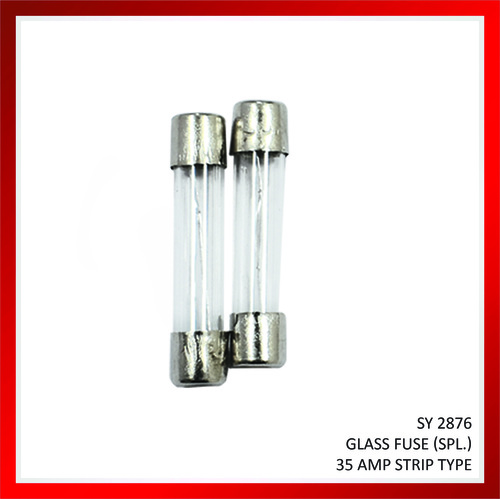
Tell us about your requirement

Price:
Quantity
Select Unit
- 50
- 100
- 200
- 250
- 500
- 1000+
Additional detail
Mobile number
Email


Contact Details
DHINGRA AUTO TRADERS
An ISO 9001:2008 Certified Company
- 1 / 218, Punja Sharif, Chabi Ganj, Kashmere Gate, Delhi - 110006, India
- Phone :08045803055

 Send Inquiry
- H-1426 ,DSIIDC NARELA INDUSTRIAL AREA ,NARELA DELHI -110040

Developed and Managed by Infocom Network Private Limited.
